A lot of shops in North Texas install paint protection film. Rodeo Werkz installs it against a documented, repeatable 18-step standard, applied to every vehicle by XPEL-trained installers inside a climate-controlled, dust-managed facility from daily-driven trucks to exotics.
Paint protection film is unusual among automotive services: a poor install can look flawless on pickup day. Problems like embedded texture under film, edges that lift, or contamination sealed beneath the surface often don’t show up until months later. Rodeo Werkz built our 18-step standard to reduce that risk at every stage, from surface prep through final inspection. 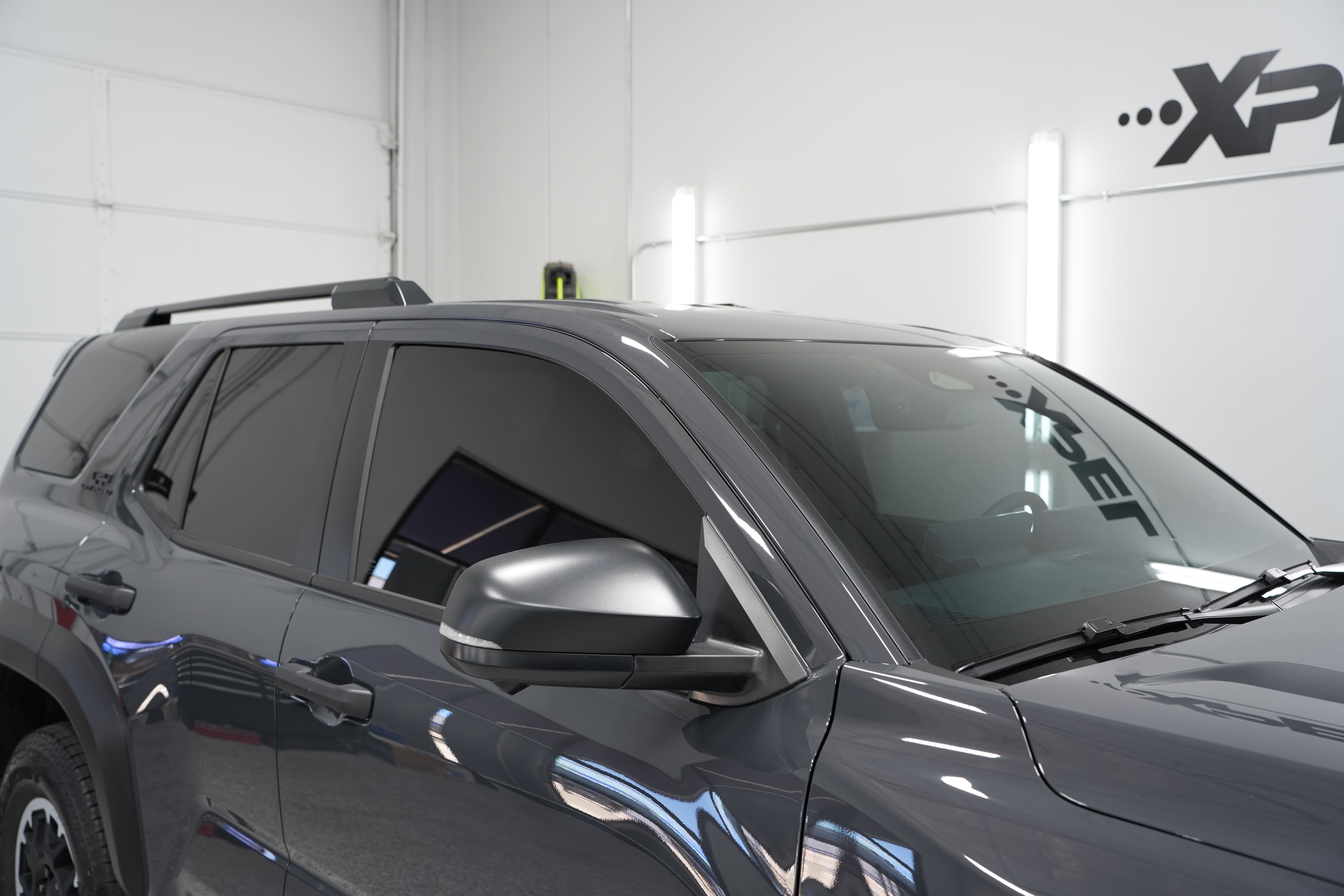
What Stands Behind the Rodeo Werkz 18-Step Standard
- XPEL-trained installers, working to a formal, documented process rather than informal on-the-job habits.
- A 10-year warranty on PPF installations we sell (exact coverage and terms provided at booking).
- CARFAX-registered installs, adding a documented protection record to your vehicle’s history.
- A climate-controlled, dust-managed facility, built to reduce the contamination risk inherent to film installation.
- Extensive experience across North Texas, including daily drivers, EVs, and high-end exotics.
- One roof, one standard — PPF, ceramic coating, window tint, and vinyl wraps delivered by the same team.
The Rodeo Werkz 18-Step PPF Standard
Phase One: Surface Preparation (Steps 1–4)
Everything in this phase gets sealed under film for years. Rodeo Werkz does not compress this phase for scheduling convenience.
Step 1: Detail Wash the Vehicle A full detail wash removes surface dirt and debris. Contamination left on the paint before film is applied can telegraph through the film as a visible bump or texture, so this step is treated as foundational rather than cosmetic.
Step 2: Clay Bar Treatment Washing removes what sits on top of the paint; clay bar lifts contamination bonded into the clear coat — rail dust, tar, tree sap, and industrial fallout are common in North Texas. Skipping this step is one of several factors that can contribute to a textured or bumpy feel developing under film over time, alongside inadequate washing or contaminated tools.
Step 3: Alcohol-Clean the Surface and Wrap Edges Alcohol removes wax, sealant, and oils that clay bar can leave behind, since adhesive bonds best to a clean, oil-free surface. We pay particular attention to wrap-around areas inside hood lips, behind bumper lines, rear fender edges because these areas carry more mechanical stress and are a common location for edge lift when preparation is incomplete.
Step 4: Final Prep and Paint Assessment Gloss film reveals imperfections in the paint beneath it rather than concealing them. On new vehicles, this step is a verification pass. On used vehicles, we assess paint condition (swirl marks, wash marks, oxidation) and discuss options honestly before proceeding since correcting paint after film is applied means removing usable film first.
Phase Two: Pattern Work (Steps 5–7)
Step 5: Plot Patterns Using XPEL DAP Patterns are generated using XPEL’s Design Access Program (DAP), computer-cut to your vehicle’s year, make, model, sub-model, and package. Where trim-specific bumper or fascia geometry affects coverage, we customize the pattern and adjust coverage to minimize the need for cutting near painted surfaces.
Step 6: Separate and Organize Patterns Plotted pieces are separated, labeled, and organized before installation begins, reducing the chance of a piece collecting dust or getting mismatched during a multi-panel install.
Step 7: Position the Pattern and Verify Initial Alignment Each piece is positioned on the panel and checked against reference lines before final installation, confirming fit and coverage before adhesive is fully set. 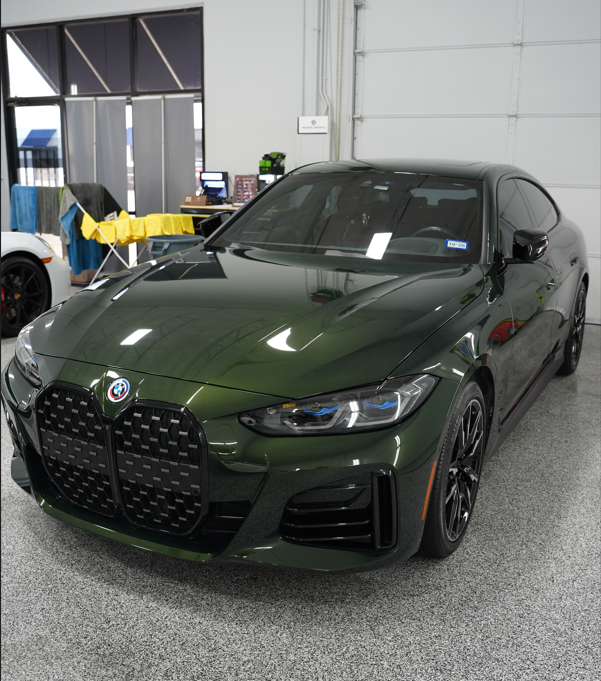
Phase Three: The Install (Steps 8–12)
Step 8: Establish the Tack Point Each panel has a starting point and reference line that the rest of the piece aligns to. Locating it accurately, developed through installer experience and repetition, helps the panel lay down evenly with consistent gaps.
Step 9: Manage Film Tension Film is worked to sit with even tension across the panel. Uneven tension can produce “fingers” — small stretch lines radiating from a high-tension point which are one of several visual indicators of installation quality and are addressed as film is applied rather than after the fact.
Step 10: Inspect for and Minimize Visible Contamination Installers actively check for particles during application rather than only at the end. Film is worked to reduce the risk of contamination being sealed beneath the surface, though no installation environment can guarantee zero particles; our climate-controlled, dust-managed facility is built specifically to minimize this risk.
Step 11: Clear Installation Solution From Under the Film Each panel is worked to remove installation solution from beneath the film. Excess trapped moisture can, in some cases, affect adhesion or leave temporary marks, so this is treated as a quality step during install rather than left to resolve on its own.
Step 12: Lock Edges Promptly After Squeegee PPF adhesive has a working window during which an edge can be pressed and set effectively. Locking edges promptly, before the adhesive begins to relax, supports a stronger, cleaner bond and is one reason our installers focus on one vehicle at a time.
Phase Four: Edge Work and Final Inspection (Steps 13–18)
Several final steps focus specifically on edge preparation, drying, wrapping, and inspection, since edges are where PPF installs are most likely to show wear first.
Step 13: Flush Edges With Purified Water Edges are flushed with purified water to remove installation residue and support clean edge adhesion. Purified water is used because tap water minerals can leave residue at the bond line.
Step 14: Verify Edge Lock A dedicated second pass checks that every edge is fully set before moving to drying and wrapping.
Step 15: Dry Edges With Filtered, Controlled Air Filtered, controlled air removes residual moisture from edges and wrap-around areas that towel-drying alone may not fully reach.
Step 16: Final Wipe-Down The vehicle is wiped down before final edge work so no debris is reintroduced onto a finished surface.
Step 17: Wrap and Heat-Set the Edges Controlled heat is used to make film pliable enough to conform around panel edges, finished with microfiber to protect both paint and film while pressure is applied. A properly wrapped edge sits closer to the panel line and is less likely to catch dirt, light, or a pressure washer stream than an unwrapped edge left with a hard stop.
Step 18: Final Inspection Every surface, edge, and corner is inspected before the vehicle is returned to you. 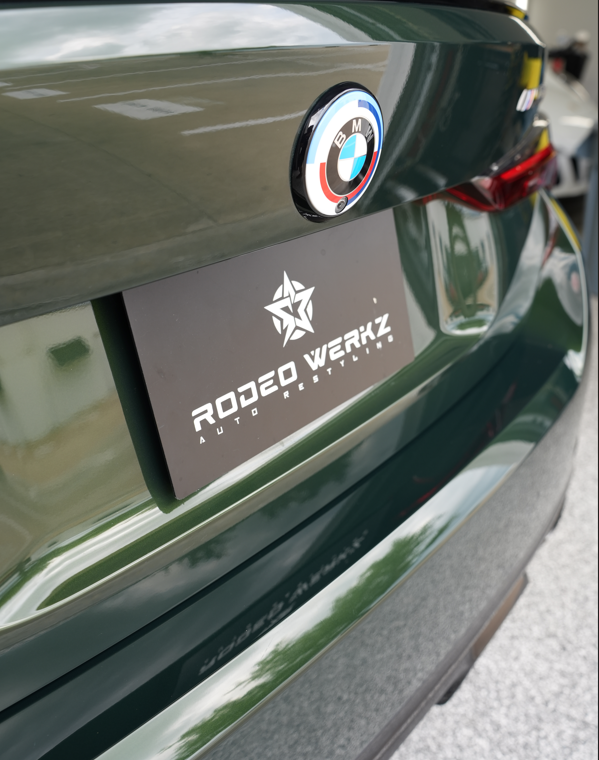
XPEL PPF Coverage Options at Rodeo Werkz
Every Rodeo Werkz PPF installation includes installation to our 18-step standard, XPEL’s manufacturer warranty coverage, CARFAX registration, and self-healing film that releases light swirls with heat.
We also install XPEL COLOR PPF for full color-change protection. (Removed “PURE PPF” and “over 100 finishes” pending verification — confirm current finish count and correct product naming with XPEL before republishing.)
Warranty note: XPEL’s manufacturer warranty covers defects in the film itself. Installation quality — including contamination, tension, and edge work — is Rodeo Werkz’s responsibility, and issues traced to workmanship are handled directly by us rather than through the film manufacturer’s warranty.
Why Dallas Drivers Choose Rodeo Werkz for Paint Protection Film
When comparing PPF installers, it’s worth asking:
- Is the vehicle clay-barred before installation?
- Are patterns computer-cut, or trimmed on the car?
- How are edges wrapped and finished?
- If the vehicle is used, is paint condition assessed and discussed before installation?
- Is the install documented with CARFAX?
Rodeo Werkz has built its 18-step standard around clear answers to each of these, and serves drivers across Dallas, Plano, Frisco, McKinney, Prosper, Celina, Richardson, Addison, The Colony, Southlake, Trophy Club, and Grapevine. 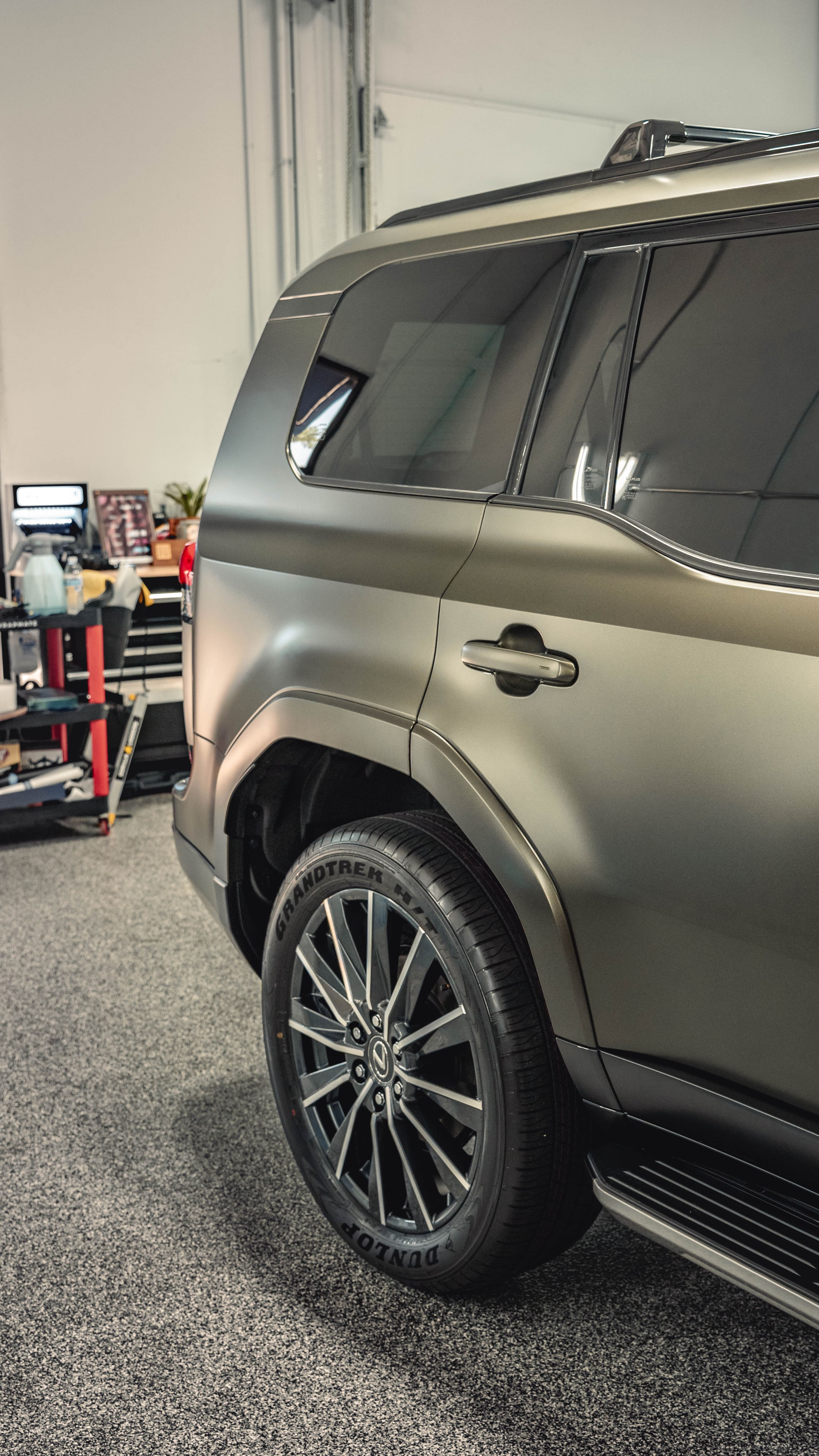
Frequently Asked Questions
What makes Rodeo Werkz’s PPF installation different?
A documented 18-step standard applied consistently to every vehicle, XPEL film and patterns, a climate-controlled facility, a 10-year manufacturer warranty, and CARFAX registration on every install.
How long does a PPF installation take?
A partial front install typically takes a full day; full front runs one to two days; full body is a multi-day install. Surface preparation and edge work are not shortened for scheduling convenience.
Do you cut film on my car?
Patterns are computer-cut using XPEL DAP based on your vehicle’s specific configuration. Coverage is customized to minimize the need for cutting near painted surfaces during installation.
Will PPF removal damage my paint?
XPEL film is engineered for clean removal under normal conditions. Removal outcomes can be affected by the condition of the paint underneath and how the film was originally installed, which is why our surface preparation phase is treated as a priority rather than a formality.
My car is used — do I need paint correction before PPF?
Possibly. Film reveals what’s underneath rather than hiding it, so we assess paint condition and discuss options honestly before installing (Step 4). Correcting paint after film is applied requires removing the film first.
Should I choose PPF or ceramic coating?
They address different needs. PPF is physical protection against rock chips and road debris. Ceramic coating creates a hydrophobic surface that’s easier to keep clean. Many clients use both, with coating applied over film.
Is my PPF install registered with CARFAX?
Yes — every PPF installation at Rodeo Werkz is CARFAX registered, which adds a documented protection record to your vehicle’s history. This creates a verifiable installation record; it does not guarantee a specific increase in resale value, which depends on many factors beyond documentation.